TPO Membrane
Why Choose a TPO Membrane for Your Flat Roof
TPO membrane has become one of the most widely used solutions for flat roof renovations, for both residential and commercial buildings. Valued for its durability, weather resistance, and energy efficiency, it provides reliable protection against water infiltration and harsh weather conditions.
This type of membrane consists of several layers designed to provide both strength and flexibility. At the center, a polyester reinforcement enhances the membrane’s mechanical strength, while the outer layers protect the roof from UV rays, wear and tear, and temperature fluctuations. Thanks to this design, the TPO membrane adapts to the structure’s natural movements and offers a durable, high-performance, and cost-effective solution for flat roofs.
The main advantages of a TPO roof
The roof is undoubtedly the most important part of a building. Flat roofs are becoming increasingly popular for residential and commercial buildings thanks to their durability, efficiency, and modern design.

Durability and Strength
TPO membrane is known for its excellent resistance to weather, tears, and aging. When properly installed, it can provide protection for several decades.

Reliable Waterproofing
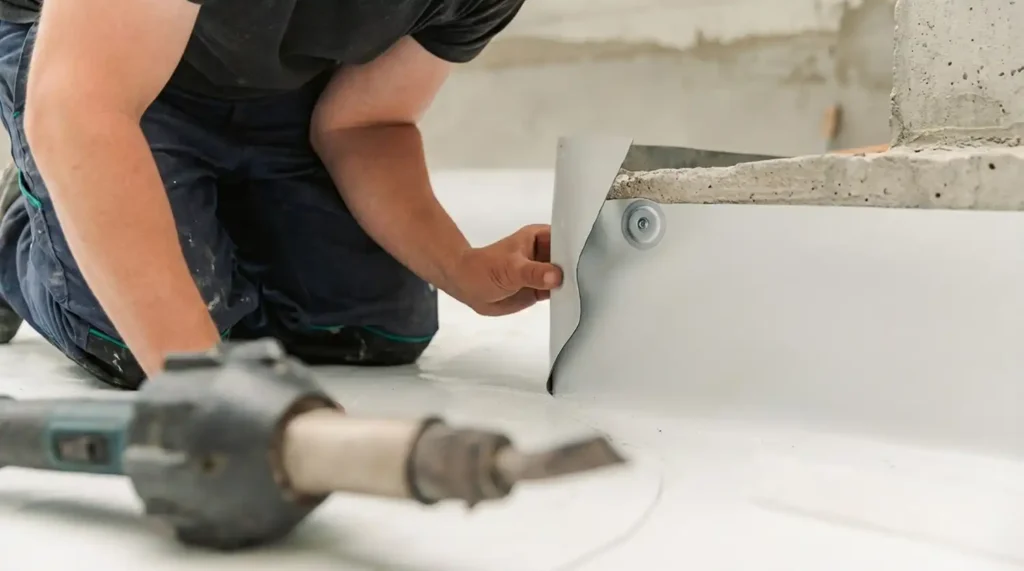
The membrane seams are heat-welded, creating a strong bond between sections. This technique reduces the risk of water infiltration and ensures long-lasting waterproofing.

Energy Performance
TPO membranes, especially white ones, reflect a large portion of solar heat. This property can help reduce roof temperature and improve the building’s energy efficiency.

Eco-Friendly Solution
TPO typically does not contain chlorine or other halogenated components. Additionally, some systems can contribute to environmental building certifications.

Low Maintenance
Thanks to its natural resistance to punctures and weather conditions, a TPO roofing system generally requires less maintenance than many other flat roofing systems.
Installation
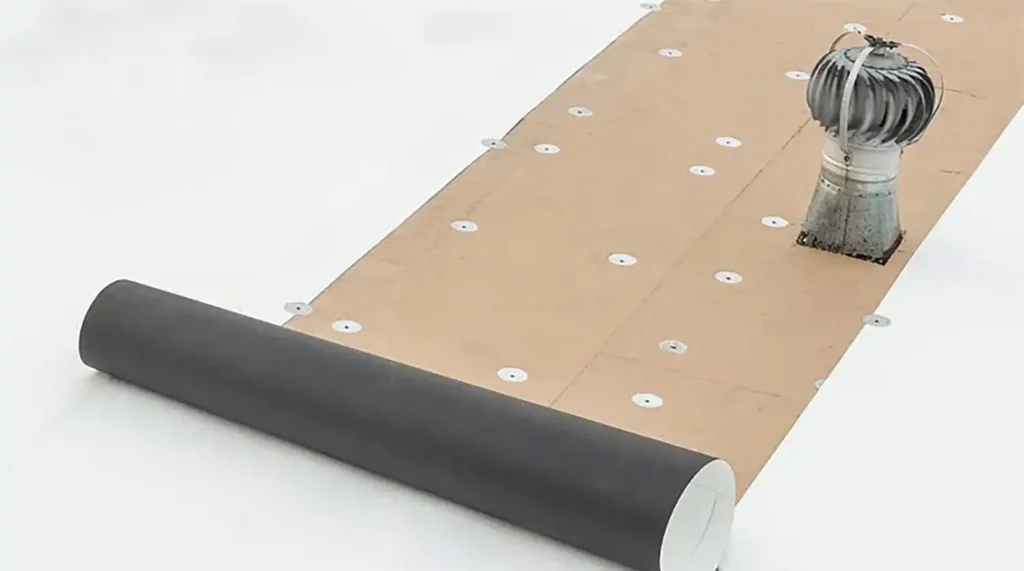
Here are the main steps for installing a white TPO membrane on a flat roof. These steps may vary depending on the system chosen (mechanical fastening, fully adhered, etc.), but the general process remains similar.